writing / business-of-rugby / professional-but-never-commercial
Part 1 of 2
Professional, but never commercial
English rugby paid its players and signed its TV deals. It never grew the audience to pay the bills.
- Published
- 2 Nov 2026
- Series
- Business of Rugby
- Read
- 9 min
What does a young English rugby fan do after the World Cup final or the last weekend of the Six Nations? They wait. Six to twelve months, for England to be on free to air television again. In the meantime, their nearest professional club might be two hours away, or more.
Weekly club fixtures are scattered across pay-walled subscriptions that most of them don't have and families can't pay for. The pathway from "that was exciting, I want more" to "where do I watch next Saturday" doesn't exist.
While fans of English clubs delight at the PREM's product, the high-scoring and competitive matches, even a casual observer would notice the empty seats in the stands, or in Exeter's case this season, a whole stand closed due to low attendance.
While there are green shoots, the last few years have been grim.
Three clubs, Worcester and Wasps and London Irish, have gone under. The remaining ten are all losing money, every year. So what's up with that?
Rugby and specifically English rugby has a winning product. But it is losing the attention economy.
Clone football's playbook
In the 1990s and 2000s, English rugby looked at Premier League football, saw the Sky TV money and tried to copy it.
Newsflash: this has not worked!
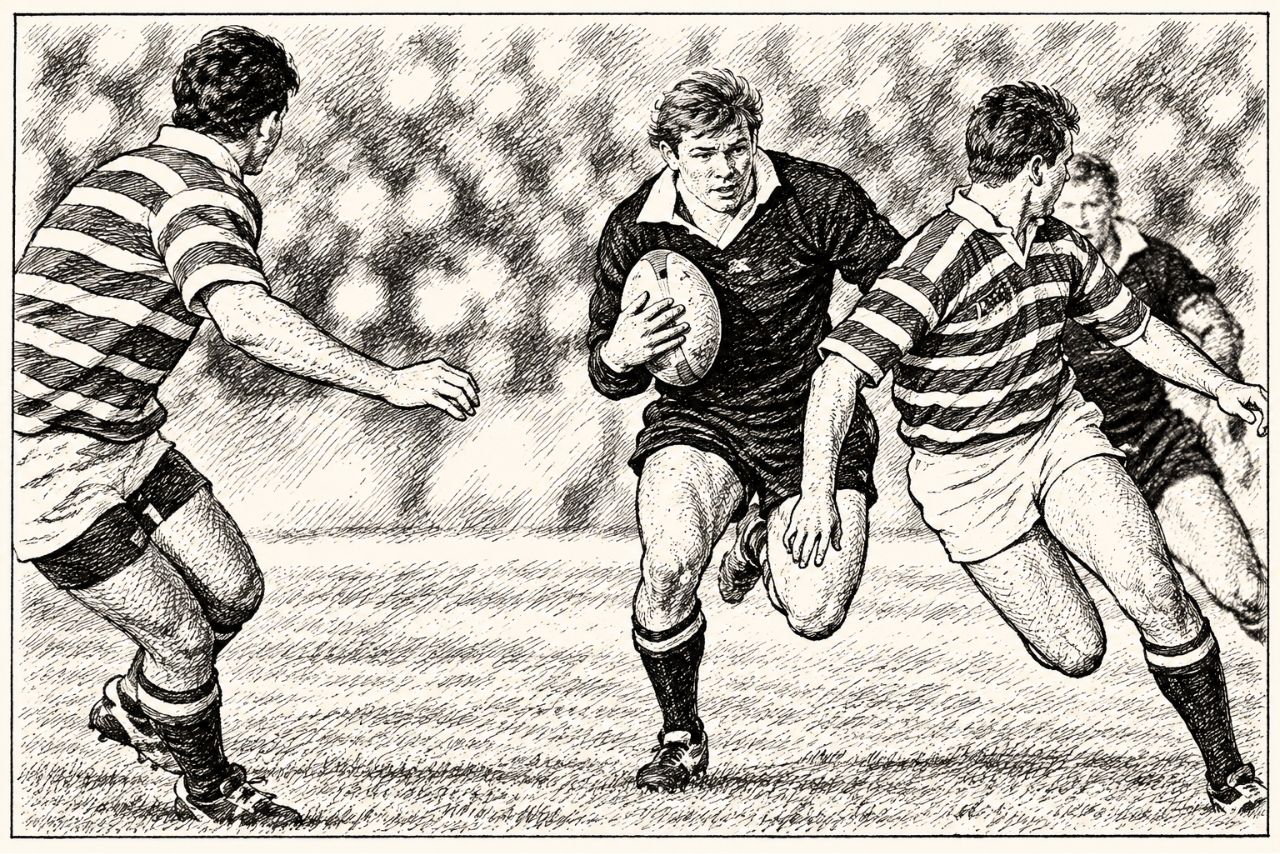
I'm old enough (just) to have been a spectator for the final one or two amateur seasons, following Leicester Tigers. A "highlight" in 1994 was an away day at Wasps. An uncovered ground holding two thousand people. The men's toilet facilities were corrugated iron sheets constructed around a pile of pine branches. Who knows if the ladies even existed. Twelve months later rugby turned "professional", i.e. the players were now officially paid a salary. Much of the rest of the game stayed distinctly amateur.
The crash test dummies
Eleven clubs have come and gone from the English top flight in thirty years. Richmond, Orrell, Bedford, West Hartlepool, Rotherham, Leeds, London Scottish, London Welsh, London Irish, Worcester and Wasps. Some went bust, some sold their grounds, some dropped quietly to the amateur game. The current ten are the survivors, and all of them are losing money.
The ten remaining PREM club owners are benevolent custodians, trying their best, subsidising losses year after year. What none of them, together or apart, has done is figure out how to grow the pie.
Rugby grew. Just not nearly enough
Rugby's actual problem, in 1995 and now, is that not enough people regularly go to the games or watch on TV. The sport has treated this as a background condition rather than the central strategic question. Thirty years on, salaries keep going up but without the attendances and resulting revenue to pay them.
Football already had the audience. Grounds full every Saturday, a hundred years of tribal fan roots, a mass television following established both in the UK and abroad. A huge paying fanbase. All football had to do, from 1992 when the Premier League separated from the English Football League, was monetise what already existed.
To its credit, PREM average attendance has more than doubled since 2001, from around 6,500 to nearly 15,000 per match. That is real growth, but it's still not big enough to be sustainable. The entire PREM season puts about 1.4 million fans through turnstiles. The Premier League does that in a month. A whole year of English professional club rugby equals four weeks of English professional club football.
The pay gap
In 2001-02, England football captain David Beckham was on £90,000 a week at Manchester United, around £4.7 million a year. England and British and Irish Lions rugby captain Martin Johnson, lifting the World Cup eighteen months later, was reportedly on around £200,000. Beckham earned Johnson's annual salary in under three weeks.
Twenty five years on, Harry Kane earns roughly £20 million a year at Bayern Munich. Maro Itoje, also England and Lions captain, earns an estimated £1 million from his Saracens and England contracts. While salary ratios, captain to captain, are broadly the same, average player wages tell an even sharper story.
In 2001-02, the average Premier League footballer earned around £475,000 a year. The average PREM rugby player earned about £55,000. The footballer was paid nine times more.
Twenty five years on, the Premier League average is £3.48 million. The PREM rugby average is around £160,000. The gap has gone from nine times to twenty two.
One average Premier League footballer earns enough in a season to field an entire PREM rugby starting XV, with roughly a million pounds change for a marquee signing like Finn Russell. Two football salaries would pay for a whole rugby squad.
And this differential is more than justified. Even if one ignores TV rights income, there is a gulf in matchday ticket volumes. The average Premier League game draws around 40,000 fans. The average PREM rugby game draws 15,000. Each Premier League club plays nineteen home league games per season; each PREM rugby club just plays nine. Multiply it out and football puts about eleven times more paying fans through its turnstiles over a season than rugby does.
Rugby is not football. It never will be. Pretending otherwise is what got the sport into this mess.
Pricing
While football fans complain of being priced out of the game, rugby is not noticeably a better deal. The Premier League caps away adult tickets at £30 at every ground, and the cheapest home-stand tickets range from around £30 at the lowest-priced clubs, e.g. West Ham or Wolves, to over £60 at the big-six grounds, e.g. Arsenal and Chelsea. The cheapest adult walk-up at a PREM rugby club starts at around £35 and runs well above £50 at the top end. For similar money football offers you a packed stadium that holds 40,000 or more. Rugby gives you a smaller ground with a quarter of it empty.
Rugby's existing fanbase skews more middle-class, and possibly less inclined to complain about prices. But the empty seats show that fans and most importantly, potential new fans are voting with their feet. The vicious cycle is in plain view. If prices are too high, fewer fans show up, the atmosphere thins, fewer still want to come next time. And every empty seat is a fan who was not there to buy food and drink or team shirts for their kids.
Even without a single penny of its enormous broadcast or sponsorship money, football could afford to pay its players much more than rugby, yet players (and ex-player rugby podcasters) keep demanding higher wages.
PREM club owners and PREM rugby players: what are we missing here?
The quiet financial scandal
Despite its enormous revenue, football has (belatedly) realised it needs managing and regulating. UEFA caps playing salary costs at 70 percent of revenue. The Premier League allows up to £105 million of losses over three years. Rules that stop clubs going bust.
Rugby seems blind to this, despite the carnage of the last 30 years. The PREM has a salary cap, but no profit and sustainability regime at all.
If you applied the same rules scaled to rugby's revenues for the last published PREM accounts, six of the ten clubs would have failed in the last season for which we have accounts. Over three years none of them would have passed. Not one. The combined annual loss across the PREM is around £24 million, on roughly £200 million of revenue. The worst, Bristol Bears, lost £4.6 million on revenue of around £15 million, bleeding through 30 percent in a single year. The best, Gloucester, lost less than half a million on revenue of around £14 million, and still lost money.
Manchester City have been found guilty of 115 charges from the Premier League for allegedly spending beyond what their business legitimately generates (appeal pending at the time of writing). Saracens were docked points and relegated in 2020 for cheating the salary cap. Meanwhile, if rugby had PSR, all the other clubs would have been fined, had points deducted and theoretically, all be relegated!
The game is actively hard to find
A casual or potential fan is not going to come across rugby by chance. The main PREM broadcast deal sits behind TNT Sports. The Investec Champions Cup, European club rugby's flagship competition, sits on an entirely separate paid service, Premier Sports. Rugby is losing the attention economy by hiding its product.
Most of the country has no club at all
Back to our young fans wanting more after the Six Nations or World Cup, vast swathes of the country have no club at all. There is no professional club in Yorkshire, Merseyside, Birmingham, the south coast or East Anglia. All these cities and regions have active amateur club and school participation, but only 40 percent of the English population lives within an hour of a professional club.
Fans hoping to catch an international match really need to move near London, as England home games are hardly ever played outside of Allianz Stadium at Twickenham.
The opportunity hiding in the mess
The addressable audience for professional rugby has never been larger, and it is not the traditional one.
The Premier League has priced many families out. A family of four with food and travel is comfortably over £200 at a Premier League match.
Rugby's existing fans skew middle aged and older. They are the ones who can still afford the tickets. The sport cannot grow by charging them more and eventually they will "age out" of attending. It has to add the next generation and the one after.
So appealing to both families and young adults priced and squeezed out of football is an obvious target market. Hint, many English clubs are in University towns!
Commercialising the stars
Rugby players earn their income almost entirely from club salaries and RFU match fees. Compared to football, boxing, golf or basketball, the external star-brand economy barely exists.
Boxing promoter Eddie Hearn has started signing rugby stars, Henry Pollock and Finn Russell, to personal promotional deals, bringing them into the same commercial orbit as his fighters and golfers. The more rugby's stars can earn outside their club contracts, the less wage pressure sits on an insolvent league.
The women's game is actually ahead on this. England’s Ellie Kildunne and USA’s Ilona Maher are the sport’s breakout stars who are successfully combining top performances on the field and a cult-like following off the field.
Green shoots
There are reasons to be hopeful.
Red Bull have bought Newcastle, the first strategic investor the league has attracted in a long time. Bath are (finally) redeveloping their stadium. The Red Roses, the England women's team, just won the World Cup in front of record crowds, opening a female and younger (and dare we say it, gay and lesbian) audience in a way the men's game has never managed on its own.

ITV has, finally, started showing a handful of PREM club games on free to air. It has also picked up the new Nations Championship, which brings England's autumn internationals against the southern hemisphere back onto a free channel. The problem is scale. Seven PREM games a season out of ninety three doesn't build the weekly habit.
The real question
Every one of the problems above is a symptom of one deeper issue. No one in English rugby is actually accountable for growing the audience. Clubs are struggling to optimise for their own slice. The RFU takes its cut and runs Twickenham. Players and their agents push for better contracts. Nobody owns the whole pie.
The sport that figured this out, decades ago, was American professional sport. One league, shared revenue, collective growth. English rugby has stared at that model for twenty five years without taking the hint.
What a serious shift from zero sum to ecosystem would actually look like, with the quick wins, the structural reforms, and the harder conversations the sport needs to have with itself, is Part 2.